Perfume Concentration Explained: 10%, 20%, 30% and More | SAVARA
Perfume Concentration Explained: 10%, 20%, 30% and More
Have you ever wondered what 10%, 20% or 30% perfume concentration actually means?
When buying a perfume, you may see descriptions such as:
- 10% fragrance concentration
- 15% perfume concentration
- 20% fragrance concentration
- 25% fragrance concentration
- 30% perfume concentration
- Eau de Toilette
- Eau de Parfum
- Parfum
- Extrait
But what do these percentages actually tell you?
Does a 30% perfume automatically last three times longer than a 10% perfume?
Does 20% concentration always mean better quality?
Does a higher concentration always mean stronger projection?
No.
Perfume concentration is an important part of fragrance formulation, but it is only one factor that affects how a perfume smells and performs.
In this guide, we'll explain perfume concentration in simple terms and compare 10%, 20%, 30% and higher concentrations.
What Is Perfume Concentration?
Perfume concentration generally refers to the proportion of fragrance concentrate in the finished fragrance product.
A simplified example:
If you have 100 ml of finished perfume and the formula contains approximately 20 ml of fragrance concentrate, the remaining volume consists largely of the alcohol and other components used in the formulation.
This can be described as approximately:
20% fragrance concentration
For illustration:
| Fragrance Concentration | Fragrance Concentrate in 100 ml |
|---|---|
| 10% | 10 ml |
| 15% | 15 ml |
| 20% | 20 ml |
| 25% | 25 ml |
| 30% | 30 ml |
| 35% | 35 ml |
These examples are simplified to explain the concept.
Actual perfume formulations can contain additional ingredients and may not be described solely by a simple percentage calculation.
What Is Fragrance Concentrate?
Before understanding concentration, it helps to understand what fragrance concentrate means.
Fragrance concentrate is the aromatic portion of a perfume formulation.
It can contain a carefully selected combination of:
- Natural essential oils
- Aroma molecules
- Natural extracts
- Resins
- Woods
- Floral materials
- Musks
- Fruity materials
- Spices
- Other fragrance ingredients
The concentrate is designed to create the fragrance's overall smell.
It is then formulated into the finished product using suitable carriers and other ingredients.
Does 30% Mean the Perfume Is Three Times Stronger Than 10%?
Not necessarily.
This is one of the biggest misunderstandings about perfume concentration.
If one fragrance contains approximately 30% fragrance concentrate and another contains approximately 10%, the first has a higher proportion of fragrance concentrate.
But that does not mean:
30% = 3× the smell
or:
30% = 3× the longevity
or:
30% = 3× the projection
Fragrance performance is much more complicated.
It depends on:
- The composition of the fragrance
- The volatility of the materials
- The type of fragrance ingredients
- Skin chemistry
- Temperature
- Humidity
- Application
- Formula design
- Concentration
Therefore, concentration should be considered one part of the performance equation.
10% Perfume Concentration Explained
A fragrance with approximately 10% fragrance concentrate contains a relatively lower proportion of aromatic concentrate than a 20% or 30% formulation.
A 10% formulation can be designed to feel:
- Light
- Fresh
- Easy to wear
- Suitable for daytime
- Suitable for warm environments
However, concentration alone does not determine the character of the perfume.
A well-designed 10% fragrance can still smell beautiful and perform differently depending on its ingredients and formula.
When Can 10% Concentration Be Useful?
A lower concentration may be attractive for people who prefer a lighter fragrance experience.
For example:
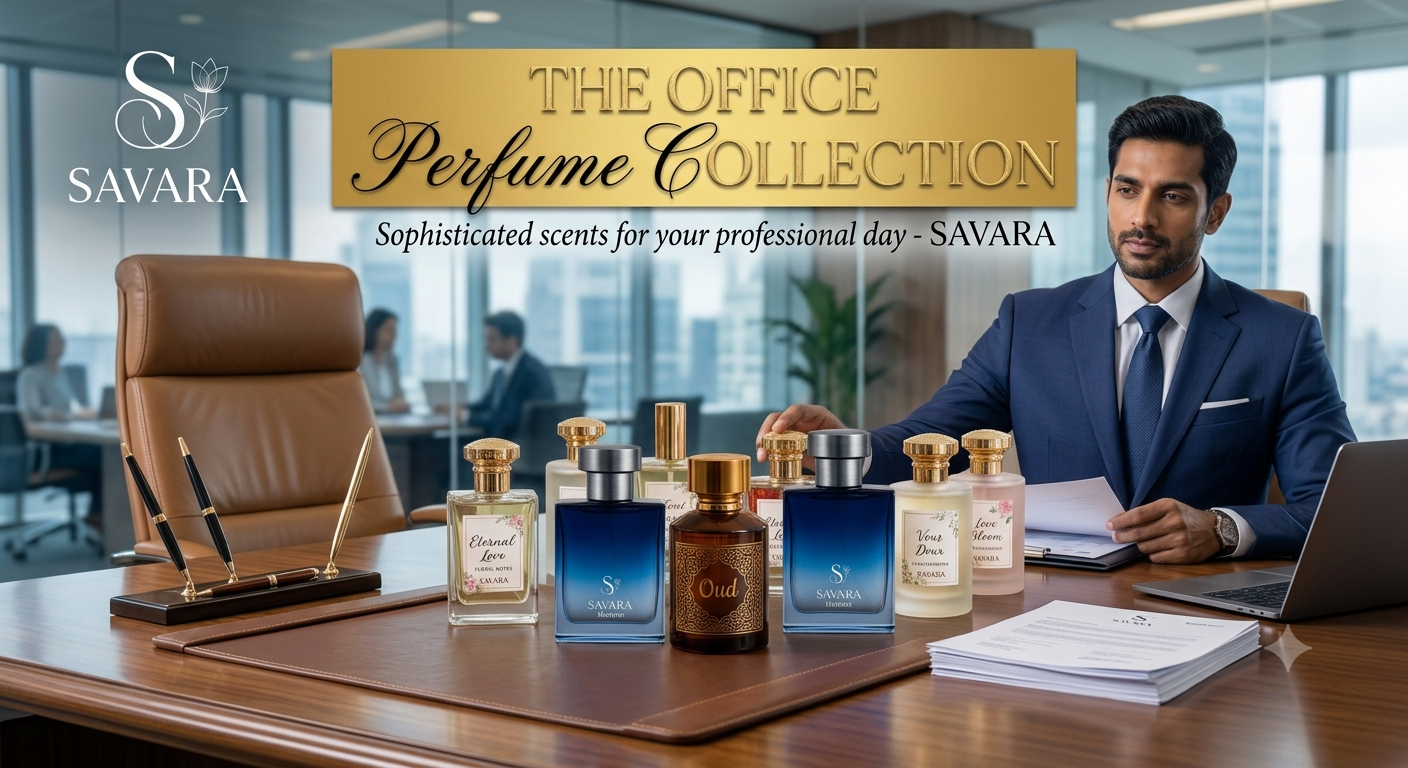
Office
You may prefer a fragrance that stays relatively close to the wearer.
Summer
Fresh and light compositions can feel comfortable in warm conditions.
Casual Use
A lighter fragrance can work well for everyday situations.
Frequent Reapplication
Some people prefer applying a lighter fragrance more often rather than wearing a stronger concentration.
15% Perfume Concentration
Around 15% fragrance concentration sits between lower and higher concentration formulations.
Depending on the formulation and product classification, a fragrance around this level may provide a balance between:
- Noticeable scent
- Wearability
- Freshness
- Depth
- Performance
However, there is no universal rule saying that 15% automatically belongs to one particular commercial category.
The names EDT, EDP and Parfum are not simply fixed mathematical formulas that apply identically to every brand.
20% Perfume Concentration Explained
A 20% fragrance concentration is a common target for many perfume formulations.
At this level, a fragrance may offer a richer and more noticeable experience than a lower-concentration formulation, depending on the materials used.
A 20% perfume may be suitable for:
- Everyday wear
- Office
- Dates
- Evening occasions
- Weddings
- Social events
But again:
20% concentration does not guarantee a specific number of hours of longevity.
Two perfumes at 20% can perform very differently.
Why Can Two 20% Perfumes Smell and Perform Differently?
Imagine two perfumes:
Perfume A
20% fragrance concentrate
Perfume B
20% fragrance concentrate
You might expect identical performance.
But they can be completely different.
Why?
Because "20%" tells you approximately how much fragrance concentrate is present, not exactly what is inside that concentrate.
Perfume A could contain a high proportion of:
- Fresh citrus materials
- Light aromatics
- Fresh green notes
Perfume B could contain more:
- Woods
- Musks
- Amber materials
- Vanilla
- Resinous materials
Their evaporation behavior and perceived performance can therefore differ.
25% Perfume Concentration
A fragrance formulated around 25% fragrance concentrate contains a higher proportion of aromatic concentrate than a 10%, 15% or 20% formulation.
It can be used for richer fragrance experiences.
Depending on the composition, a 25% formulation may provide:
- Greater scent density
- More depth
- A richer character
- Potentially longer perceptibility
But again, these are not guaranteed outcomes.
A higher concentration can influence the fragrance experience, but the formula itself remains extremely important.
30% Perfume Concentration Explained
A 30% fragrance concentration represents a relatively high proportion of fragrance concentrate.
For a simplified 100 ml example:
30 ml fragrance concentrate + approximately 70 ml carrier and other formulation components
However, the actual manufacturing formula may contain additional ingredients and the final volume calculation can be more complex.
A 30% formulation can be designed to create a rich, dense and long-wearing fragrance experience.
But 30% should not automatically be interpreted as:
"Three times stronger than 10%."
What Happens When You Increase Concentration?
Increasing the concentration can change several characteristics of a perfume.
It can influence:
1. Scent Density
The fragrance may feel richer or more concentrated.
2. Longevity
A higher concentration can contribute to longer perceptibility, but this depends heavily on the formula and materials.
3. Projection
Higher concentration does not automatically mean stronger projection.
Some high-concentration perfumes can sit relatively close to the skin.
4. Dry-Down
A richer concentration can change how the fragrance develops and how prominent certain materials become.
5. Cost
More fragrance concentrate can increase the cost of the finished perfume, especially when expensive materials are used.
Does Higher Concentration Always Mean Better Quality?
No.
This is another common misconception.
A 30% perfume is not automatically better than a 15% perfume.
Quality depends on many things, including:
- Fragrance composition
- Ingredient selection
- Balance
- Stability
- Manufacturing quality
- Packaging
- Skin performance
- Overall fragrance experience
A beautifully balanced fragrance at a lower concentration can be preferable to an overly dense fragrance at a higher concentration.
The objective of perfumery is not simply to maximize concentration.
It is to create a pleasing and well-balanced fragrance.
Does Higher Concentration Always Mean Longer Lasting?
Not always.
This is one of the most important points to remember.
A higher proportion of fragrance concentrate can support greater persistence in some formulations, but longevity is affected by many factors.
For example:
Perfume A
10% concentration with certain long-lasting materials
could potentially remain perceptible longer than:
Perfume B
20% concentration dominated by more volatile materials.
This is why you should not judge longevity from concentration alone.
What Determines Perfume Longevity?
Several factors influence how long a fragrance remains noticeable.
1. Fragrance Materials
Different materials evaporate at different rates.
2. Formula Structure
The balance between volatile and less volatile materials matters.
3. Concentration
Concentration can influence the amount of aromatic material present.
4. Skin
Skin characteristics can affect fragrance performance.
5. Temperature
Warm conditions can accelerate evaporation.
6. Humidity
Humidity can affect how fragrance is perceived and projected.
7. Application
How and where you apply perfume can influence its performance.
8. Clothing
Fragrance can behave differently on fabric compared with skin.
Perfume Concentration vs Longevity
Let's simplify the relationship:
Higher concentration
        ↓
More fragrance concentrate
        ↓
Potentially richer fragrance experience
        ↓
But longevity still depends on
formula + materials + skin + environment
Therefore:
Concentration influences performance—it does not completely determine performance.
Perfume Concentration vs Projection
Another common misunderstanding is:
Higher concentration = stronger projection
This isn't necessarily true.
Projection describes how far the fragrance radiates from the wearer.
A fragrance can have:
- High concentration but moderate projection
- Moderate concentration but strong initial projection
- High longevity but low projection
- Strong projection initially but a softer dry-down
These characteristics are different.
Perfume Concentration vs Sillage
Sillage refers to the scented trail left behind as someone moves.
A perfume can have good longevity but moderate sillage.
Another fragrance may create a noticeable trail initially but become much softer later.
Concentration can influence these characteristics, but it does not define them by itself.
Concentration and the Fragrance Pyramid
Remember the three traditional stages of perfume:
Top Notes
The opening.
Examples:
- Lemon
- Bergamot
- Grapefruit
- Mint
Middle Notes
The heart.
Examples:
- Rose
- Jasmine
- Lavender
- Cardamom
Base Notes
The dry-down.
Examples:
- Musk
- Amber
- Vanilla
- Sandalwood
- Oud
Concentration can affect the overall experience of these materials, but it does not simply mean:
10% = top notes
20% = middle notes
30% = base notes
That would be incorrect.
The three concepts describe different things:
Concentration = amount/proportion of fragrance concentrate
Notes = scent characteristics
Fragrance pyramid = how the scent develops
Eau de Toilette vs Eau de Parfum vs Parfum
You may also encounter commercial terms such as:
- Eau de Toilette (EDT)
- Eau de Parfum (EDP)
- Parfum
- Extrait
These categories generally indicate different levels of fragrance concentration.
However, there are no universally fixed concentration percentages that every manufacturer follows identically.
Typical industry ranges are often presented approximately, but individual brands and products can differ.
A simplified educational comparison might look like:
| Type | General Concentration Tendency | Typical Character |
|---|---|---|
| Eau de Cologne | Lower | Light, fresh |
| Eau de Toilette | Lower-to-moderate | Fresh to moderate |
| Eau de Parfum | Moderate-to-higher | Richer |
| Parfum | Higher | Dense, concentrated |
| Extrait | Often very high | Rich and concentrated |
These categories should not be treated as strict universal percentage standards.
Is 20% Automatically Eau de Parfum?
Not necessarily.
You may see a fragrance with approximately 20% fragrance concentrate marketed as an Eau de Parfum.
But commercial naming and concentration ranges can vary.
Therefore, don't assume:
"20% always means EDP."
The brand's actual product classification and formulation should be considered.
Is 30% Automatically Parfum?
Again, not necessarily.
A 30% fragrance concentrate is relatively high, but commercial naming conventions vary.
A manufacturer may describe a product differently depending on the formulation and product category.
Why Some Perfumes Use 10% and Others 30%
Different concentration levels can be used to achieve different product objectives.
For example:
10%
Potentially lighter and more refreshing.
15%
Balanced and easy to wear.
20%
Richer everyday perfume profile.
25%
More concentrated fragrance experience.
30%
High-concentration, richer formulation.
But these are general descriptions, not guarantees.
The actual fragrance experience depends on the complete formula.
What Is the Best Perfume Concentration?
There is no single concentration that is best for everyone.
The right concentration depends on:
- Personal preference
- Climate
- Occasion
- Fragrance style
- Desired projection
- Desired longevity
- Budget
- Application habits
Someone may prefer a lighter fragrance during the day and a richer fragrance in the evening.
Another person may prefer the same concentration throughout the day.
Choosing Perfume Concentration for Indian Weather
India has a wide range of climates, and temperature and humidity can influence how fragrances are perceived.
Hot Summer
You may prefer:
- Fresh
- Citrus
- Aquatic
- Green
- Light floral
profiles.
A lighter concentration can sometimes feel more comfortable, particularly if you prefer a subtle fragrance experience.
Monsoon
Fresh, aromatic and clean fragrances can work well for many people.
Winter
Richer profiles containing:
- Oud
- Amber
- Vanilla
- Woods
- Musk
- Spices
can feel particularly suitable.
A higher concentration may also be preferred by people who enjoy a richer fragrance experience.
But there is no universal rule.
Choosing Concentration for Different Occasions
Office
Consider a moderate or lighter fragrance if you work in a shared space.
Fresh, clean and woody profiles can be suitable.
Everyday Wear
A moderate concentration can offer a balance between noticeable fragrance and comfort.
Date Night
You may prefer richer profiles with:
- Amber
- Vanilla
- Musk
- Woods
- Floral notes
Weddings
Indian weddings often involve long events and outdoor as well as indoor environments.
Rich profiles such as:
- Oud
- Rose
- Amber
- Sandalwood
- Musk
can be attractive options.
Evening Events
Higher-concentration fragrances can be considered if you enjoy a richer scent experience.
10% vs 20% vs 30% Perfume Concentration
Here's a simple comparison:
| Feature | 10% | 20% | 30% |
|---|---|---|---|
| Fragrance concentrate | Lower | Moderate | Higher |
| Scent density | Often lighter | Often richer | Often denser |
| Potential longevity | Formula dependent | Formula dependent | Formula dependent |
| Projection | Formula dependent | Formula dependent | Formula dependent |
| Suitable for | Light everyday use | Everyday & occasions | Rich fragrance experience |
| Cost of fragrance concentrate | Lower | Higher | Higher |
| Guaranteed hours? | No | No | No |
The most important word in this table is:
Formula dependent.
What About 40% or 50% Concentration?
Very high fragrance concentrations are possible in some perfume products, but simply increasing concentration does not automatically create a better perfume.
At very high levels, the fragrance may become:
- More dense
- Richer
- Stronger in certain aspects
- More expensive
But formulation balance becomes even more important.
More fragrance concentrate is not always better.
A perfume must be designed so that the materials work together harmoniously.
Can You Make a 30% Perfume at Home?
Technically, fragrance formulations can be designed at different concentration levels, but professional perfume manufacturing requires more than simply mixing fragrance oil and alcohol.
Factors such as:
- Material compatibility
- Solubility
- Stability
- Clarity
- Skin safety
- Regulatory requirements
- Alcohol quality
- Packaging compatibility
- Batch consistency
must be considered.
For commercial products, formulations should be developed and manufactured using appropriate professional processes and compliant ingredients.
Does Adding More Perfume Oil Always Improve the Fragrance?
No.
Suppose a fragrance is pleasant at one concentration.
Simply adding more concentrate may not improve it.
It can change:
- Balance
- Projection
- Texture
- Opening
- Dry-down
- Overall character
The fragrance may even become less pleasant if the formulation is not designed for that concentration.
This is why professional perfumery focuses on formulation, not simply maximum concentration.
Why Some Fresh Perfumes Don't Last as Long
Fresh fragrances often contain materials that are perceived quickly.
Citrus and some fresh aromatic materials can be relatively volatile.
This can result in a fragrance that feels very vibrant initially but becomes softer sooner.
A fragrance can still be beautifully designed even if its character is lighter.
Longevity should not be the only measure of fragrance quality.
Why Oud, Musk and Amber Are Often Associated With Longevity
Materials and accords such as:
- Oud
- Musk
- Amber
- Woods
- Resins
- Vanilla
are often associated with the later stages of fragrance development.
Many of these materials can contribute to persistence.
However:
Oud ≠ guaranteed long-lasting
Musk ≠ guaranteed long-lasting
30% concentration ≠ guaranteed long-lasting
Performance always depends on the complete formula.
How to Test Perfume Concentration Properly
If you want to compare fragrances, don't only compare the percentage.
Try the perfumes on skin under similar conditions.
Step 1 — Apply
Use a similar number of sprays.
Step 2 — Smell the Opening
Notice the first impression.
Step 3 — Wait
Allow the perfume to develop.
Step 4 — Check After an Hour
Notice the heart and developing dry-down.
Step 5 — Check Later
Observe how much fragrance remains perceptible.
This gives you a much better understanding of actual performance than concentration alone.
Should You Buy 10%, 20% or 30%?
Use your lifestyle and preferences as the starting point.
Choose a lighter concentration if:
- You prefer subtle fragrance.
- You live or work in close quarters.
- You enjoy fresh scents.
- You prefer reapplying during the day.
Consider a moderate concentration if:
- You want versatility.
- You want something for everyday and occasional use.
- You prefer a noticeable but balanced fragrance.
Consider a higher concentration if:
- You enjoy richer fragrances.
- You prefer a denser scent experience.
- You want a fragrance designed around deeper materials.
- You are comfortable with a more concentrated formulation.
Again, concentration is only one factor.
Perfume Concentration and Price
Higher concentration can increase the cost of a perfume because more fragrance concentrate is used.
However, price is not simply determined by concentration.
Two perfumes with the same concentration can have very different production costs because the fragrance materials can differ significantly in cost.
For example, a formulation containing expensive specialty materials may cost more than another formulation at the same concentration.
Other factors include:
- Bottle
- Packaging
- Manufacturing
- Distribution
- Marketing
- Brand positioning
Therefore:
Higher price ≠ automatically higher concentration
and
Higher concentration ≠ automatically better quality.
SAVARA Perfume Concentration
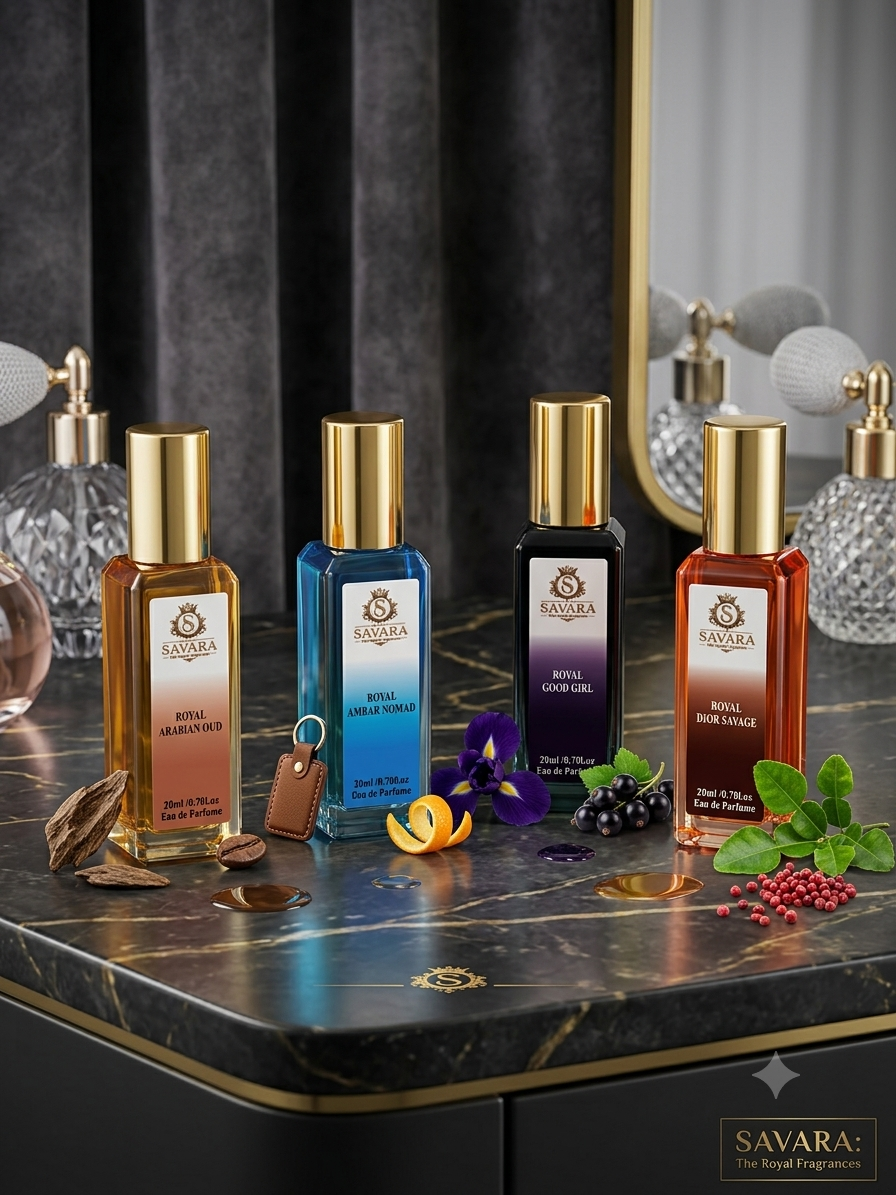
At SAVARA – The Royal Fragrances, understanding concentration can help customers select a fragrance according to their preferred fragrance experience.
Whether you prefer a lighter everyday scent or a richer fragrance profile for special occasions, concentration is one of the factors to consider alongside:
- Fragrance notes
- Fragrance family
- Occasion
- Weather
- Projection
- Longevity
- Personal preference
For example, a fresh citrus fragrance may be experienced very differently from a rich oud, amber or musk composition even when both are offered at a similar concentration.
The goal is not simply to choose the highest percentage.
The goal is to find a well-balanced fragrance that you enjoy wearing.
The SAVARA Approach to Choosing a Fragrance
When choosing a SAVARA fragrance, consider these five questions:
1. What scent do you enjoy?
Fresh, floral, woody, oud, musk, amber or sweet?
2. When will you wear it?
Daily, office, date, wedding or evening?
3. What is the weather like?
Hot, humid, cool or dry?
4. How noticeable do you want the fragrance to be?
Subtle, moderate or rich?
5. Have you tested the dry-down?
Don't judge the fragrance only from the first spray.
This approach can help you choose a fragrance based on the complete experience, rather than a single number on the label.
Common Myths About Perfume Concentration
Myth 1: 30% lasts exactly three times longer than 10%.
False.
Concentration does not translate directly into hours of longevity.
Myth 2: Higher concentration always means stronger projection.
False.
Projection depends on the formulation and the volatility of the materials.
Myth 3: Higher concentration means higher quality.
False.
Quality depends on the overall formulation and fragrance experience.
Myth 4: 20% always means Eau de Parfum.
Not necessarily.
Commercial concentration ranges and product naming can vary.
Myth 5: More perfume oil always means better perfume.
False.
Increasing concentration can change the balance of a fragrance and does not automatically improve it.
Quick Perfume Concentration Cheat Sheet
| Concentration | Simple Meaning |
|---|---|
| 5% | Relatively light fragrance concentrate |
| 10% | Light concentration |
| 15% | Moderate concentration |
| 20% | Higher/moderate concentration |
| 25% | Concentrated fragrance |
| 30% | High fragrance concentration |
| 35%+ | Very concentrated formulation in some products |
These percentages are useful for understanding the proportion of fragrance concentrate, but they should not be treated as universal commercial classifications.
Frequently Asked Questions
What does 10% perfume concentration mean?
It generally means that approximately 10% of the finished formulation is fragrance concentrate, depending on how the manufacturer defines and calculates concentration.
Is 20% perfume concentration good?
20% can be an appropriate concentration for many fragrance formulations, but concentration alone does not determine quality or performance.
Is 30% perfume concentration better than 20%?
Not automatically. A 30% formulation contains a higher proportion of fragrance concentrate, but the overall fragrance experience depends on the complete formulation.
Does 30% perfume last longer than 10%?
It can, depending on the formulation and materials, but there is no universal rule that it will last exactly three times longer.
Does higher concentration mean stronger perfume?
It can make the fragrance feel more concentrated or dense, but perceived strength and projection depend on the complete formula.
What concentration is best for summer?
Many people prefer lighter or moderate concentrations with fresh fragrance profiles during hot weather, but personal preference and the specific formula matter.
What concentration is best for winter?
Richer fragrance profiles and higher concentrations may be appealing in cooler weather, particularly with woods, amber, vanilla, musk and oud.
What concentration is best for weddings?
There is no universal best concentration. Many people prefer noticeable, richer fragrance profiles for weddings and special occasions.
Is EDP stronger than EDT?
Generally, Eau de Parfum contains a higher proportion of fragrance concentrate than Eau de Toilette, but exact concentration ranges vary among manufacturers.
Does perfume concentration affect projection?
It can influence the fragrance experience, but projection depends on many factors, including the materials and formulation.
What is the difference between concentration and longevity?
Concentration refers to the proportion of fragrance concentrate in the formulation. Longevity refers to how long the fragrance remains perceptible.
Why does the same concentration perform differently in different perfumes?
Because the fragrance concentrate itself can contain very different materials and proportions, each with different volatility and scent characteristics.
Final Thoughts: Concentration Is Only One Part of Perfume
Understanding perfume concentration helps you make more informed fragrance choices.
Remember the basic idea:
10% → Lower concentration
20% → More concentrated
30% → Higher concentration
But don't make the mistake of thinking:
30% = 3× longevity
or
30% = 3× quality.
Perfume is much more complex than a percentage.
The final experience depends on the relationship between:
Concentration + Ingredients + Formula + Skin + Weather + Application
The best perfume is not necessarily the one with the highest concentration.
It is the fragrance whose scent, character, performance and overall experience match what you enjoy.
Whether you prefer fresh citrus, elegant florals, smooth musk, rich oud, warm amber or creamy vanilla, understanding concentration gives you one more tool for finding the right fragrance.
Discover Your Fragrance With SAVARA
Explore the world of SAVARA – The Royal Fragrances and discover fragrances designed for different personalities, occasions and fragrance preferences.
SAVARA — The Royal Fragrances.
Wear your fragrance. Express your character.
Recent Posts


Subscribe to our newsletter for regular updates about Offers, Coupons & more