




What Are Fragrance Notes? A Beginner's Guide to Perfume Notes | SAVARA

What Are Fragrance Notes?
When you look at a perfume description, you may see words such as:
Bergamot • Rose • Jasmine • Oud • Musk • Vanilla • Sandalwood • Amber
But what do these words actually mean?
These are commonly called fragrance notes or perfume notes.
A fragrance note is a way of describing a particular smell, scent impression, or aromatic character that contributes to the overall experience of a perfume.
For example:
- Bergamot can give a perfume a bright, fresh citrus character.
- Rose can add a soft, romantic floral character.
- Oud can create a rich, woody and deep impression.
- Vanilla can add sweetness and warmth.
- Musk can contribute a soft, clean or sensual character.
- Sandalwood can provide a creamy, smooth woody impression.
A perfume can contain many different aromatic materials that work together to create a complete fragrance.
Understanding fragrance notes helps you answer an important question when choosing perfume:
"What kind of smell can I expect from this fragrance?"
Why Are Fragrance Notes Important?
Imagine you are shopping for a perfume online.
You find two fragrances.
Perfume A
Citrus • Fresh • Woody
Perfume B
Rose • Vanilla • Musk
Even before smelling them, you can probably imagine that they may offer very different experiences.
Perfume A may feel:
- Fresh
- Bright
- Clean
- Energetic
- Woody
Perfume B may feel:
- Floral
- Soft
- Warm
- Sweet
- Smooth
This is why fragrance notes are useful.
They give shoppers a scent profile before they actually smell the perfume.
Fragrance Notes Are Not Simply a List of Ingredients
This is one of the most important concepts for beginners.
A fragrance note is not necessarily the same thing as a physical ingredient.
When a perfume says it contains a "rose note," it does not necessarily mean that the formula simply contains rose petals or rose oil.
A perfumer may create a rose-like smell using:
- Natural materials
- Aroma molecules
- Essential oils
- Synthetic ingredients
- Fragrance accords
- A combination of several materials
The note describes the olfactory impression.
Therefore:
Fragrance notes ≠ complete ingredient list
The ingredient list and the marketing description of fragrance notes serve different purposes.
What Is an Accord in Perfumery?
Another word you will frequently encounter is accord.
An accord is a combination of different aromatic materials designed to create a particular scent impression.
Think of an accord like a musical chord.
A single musical note is one sound.
Several notes played together create a chord.
Similarly, several aroma materials can be combined to create an olfactory impression.
For example, a perfume may have a:
"Fresh aquatic accord."
That does not necessarily mean there is one ingredient called "aquatic."
Instead, multiple materials may be combined to create a fresh, watery impression.
This is why modern perfumery can create impressions such as:
- Ocean
- Fresh linen
- Rain
- Clean skin
- Green leaves
- Warm amber
- Soft musk
The Three Main Types of Perfume Notes
The traditional perfume note pyramid divides fragrance development into three broad categories:
- Top Notes
- Middle Notes / Heart Notes
- Base Notes
They help explain how a perfume develops after application.
A simplified structure looks like this:
             TOP NOTES
          First Impression
                 ↓
          HEART / MIDDLE
          Main Character
                 ↓
            BASE NOTES
             Dry-Down
Let's understand each one.
1. What Are Top Notes?
Top notes are the scents you typically notice first after spraying a perfume.
They create the opening impression.
Common top-note styles include:
- Citrus
- Fresh
- Green
- Aromatic
- Light fruity
- Minty
- Spicy
Popular examples include:
- Lemon
- Bergamot
- Orange
- Grapefruit
- Mandarin
- Lime
- Mint
- Basil
- Pink pepper
For example, if a perfume opens with bergamot and lemon, you may initially experience a bright and refreshing citrus character.
How Long Do Top Notes Last?
Top notes are generally the most volatile part of a fragrance and therefore tend to be noticeable for a shorter period.
They may be noticeable for several minutes to around 15–30 minutes, but there is no fixed duration.
The actual experience depends on:
- Formula
- Materials used
- Concentration
- Skin
- Temperature
- Humidity
- Application
- Air movement
The top notes gradually blend with the heart of the fragrance rather than disappearing at one exact moment.
2. What Are Middle Notes?
Middle notes are also called heart notes.
They become more noticeable as the opening begins to settle.
The heart often provides much of the perfume's central character.
Common middle-note styles include:
- Floral
- Fruity
- Spicy
- Aromatic
- Herbal
- Soft woody
Examples include:
- Rose
- Jasmine
- Lavender
- Geranium
- Orange blossom
- Cardamom
- Cinnamon
- Clove
- Ylang-ylang
For example:
Bergamot → Rose → Musk
The bergamot may provide the opening.
The rose may form the floral heart.
The musk may become increasingly noticeable during the dry-down.
3. What Are Base Notes?
Base notes are the deeper components that become increasingly noticeable during the later stages of a fragrance.
They often contribute:
- Depth
- Warmth
- Richness
- Smoothness
- Persistence
Common base-note materials and styles include:
- Musk
- Vanilla
- Amber
- Sandalwood
- Cedarwood
- Vetiver
- Patchouli
- Oud
- Benzoin
- Labdanum
A perfume with sandalwood, musk and amber in its base may develop into a warmer and deeper scent as it dries down.
What Is the Perfume Note Pyramid?
The traditional representation of perfume notes is called the fragrance pyramid or note pyramid.
For example:
Top Notes
Bergamot
Lemon
Pink Pepper
Middle Notes
Rose
Jasmine
Cardamom
Base Notes
Sandalwood
Amber
Musk
This gives you a general idea of how the fragrance is intended to develop.
However, the pyramid should not be interpreted as a strict timetable.
Perfume ingredients overlap and interact.
A base material can sometimes be noticeable immediately, while a top-note character may remain perceptible longer than expected.
How Perfume Notes Change Over Time
Let's imagine you spray a perfume at 8:00 AM.
8:00 AM — Opening
You notice:
Bergamot + Lemon + Mint
The fragrance feels fresh and bright.
8:20 AM — Heart
The opening begins to soften.
You notice:
Lavender + Jasmine + Cardamom
The perfume now feels more aromatic and sophisticated.
10:00 AM onwards — Dry-Down
The deeper character becomes more prominent:
Sandalwood + Musk + Amber
The fragrance feels warmer, smoother and deeper.
This changing experience is what makes perfume different from a simple single-note scent.
Popular Fragrance Notes You Should Know
There are hundreds of materials and scent descriptions used in perfumery.
However, beginners can start by understanding some of the most common ones.
Citrus Notes
Citrus notes are associated with freshness and brightness.
Common examples:
- Lemon
- Bergamot
- Orange
- Mandarin
- Grapefruit
- Lime
- Neroli
How do citrus notes smell?
They can feel:
- Fresh
- Bright
- Clean
- Energetic
- Refreshing
Citrus profiles are often popular in warm-weather fragrances.
Floral Notes
Floral notes are among the most recognizable fragrance categories.
Common examples include:
- Rose
- Jasmine
- Tuberose
- Lavender
- Orange blossom
- Ylang-ylang
- Violet
- Iris
Floral fragrances can range from fresh and delicate to rich and intense.
Rose Notes
Rose is one of the most famous fragrance notes.
Depending on the formulation, rose can smell:
- Fresh
- Green
- Powdery
- Sweet
- Soft
- Rich
- Romantic
Rose is commonly found in both women's and unisex fragrances.
Jasmine Notes
Jasmine can provide a rich floral character.
It may be perceived as:
- Floral
- Creamy
- Sweet
- Intense
- Elegant
Jasmine frequently appears in sophisticated floral compositions.
Woody Notes
Woody notes provide depth and structure.
Common examples include:
- Sandalwood
- Cedarwood
- Vetiver
- Patchouli
- Guaiac wood
- Oud
Woody fragrances may feel:
- Warm
- Dry
- Smooth
- Earthy
- Sophisticated
- Rich
Woody notes are frequently used in men's, women's and unisex fragrances.
Sandalwood
Sandalwood is known for its smooth and creamy woody character.
It can add:
- Warmth
- Softness
- Creaminess
- Depth
Sandalwood is particularly interesting in fragrances designed around a warm, elegant or traditional character.
Cedarwood
Cedarwood can contribute a drier woody character.
It is often described as:
- Dry
- Woody
- Clean
- Earthy
- Slightly sharp
It can add structure to a fragrance composition.
Vetiver
Vetiver is a distinctive aromatic material often associated with:
- Earthiness
- Dry woods
- Green character
- Smokiness
- Root-like nuances
Vetiver can give a fragrance a refined and sophisticated character.
Oud Notes
Oud is one of the most recognized fragrance styles in Middle Eastern and luxury perfumery.
Oud can be experienced as:
- Woody
- Rich
- Warm
- Smoky
- Resinous
- Earthy
- Animalic
- Sweet, depending on the composition
Not every oud fragrance smells the same.
An oud fragrance can be soft and polished or powerful and intense depending on how it is formulated.
For Indian consumers, oud can also connect with traditional attar and Middle Eastern fragrance preferences.
Musk Notes
Musk is another extremely popular fragrance profile.
Modern perfumes use various types of musk materials and accords.
Musk can contribute a:
- Clean
- Soft
- Powdery
- Warm
- Skin-like
- Smooth
character.
White musk is often associated with a cleaner, softer interpretation of musk.
Musk is frequently used in both everyday fragrances and luxury compositions.
Amber Notes
Amber is an important fragrance concept, but it can be confusing for beginners.
In modern perfumery, "amber" often describes a warm, sweet, resinous fragrance accord rather than one single ingredient.
Amber-style fragrances can contain combinations of materials that create impressions such as:
- Warmth
- Sweetness
- Resin
- Vanilla
- Spice
- Richness
Amber is often found in evening and cold-weather fragrances.
Vanilla Notes
Vanilla is one of the most recognizable sweet fragrance notes.
It can smell:
- Sweet
- Creamy
- Warm
- Comforting
- Soft
Vanilla can be used in:
- Floral perfumes
- Gourmand fragrances
- Amber fragrances
- Woody fragrances
- Musk fragrances
It can also soften sharper or more intense fragrance compositions.
Fruity Notes
Fruity notes can give fragrances a juicy, bright or playful character.
Common examples include:
- Apple
- Pear
- Peach
- Plum
- Raspberry
- Strawberry
- Blackcurrant
- Mango
Fruity notes can be used in both men's and women's fragrances.
They are particularly common in modern floral-fruity and fresh compositions.
Spicy Notes
Spicy notes can add warmth, energy and complexity.
Common examples include:
- Cardamom
- Cinnamon
- Clove
- Nutmeg
- Black pepper
- Pink pepper
Spices can appear in the opening, heart or base depending on the formulation.
Fresh and Aquatic Notes
Fresh and aquatic fragrances are popular for everyday and warm-weather use.
They may create impressions of:
- Clean water
- Sea air
- Freshness
- Coolness
- Clean fabric
- Open air
An aquatic note does not necessarily mean the perfume contains actual seawater.
It can be an olfactory impression created by a combination of fragrance materials.
Green Notes
Green notes are designed to evoke the smell of:
- Leaves
- Grass
- Herbs
- Fresh stems
- Green plants
They can make a fragrance feel:
- Natural
- Fresh
- Crisp
- Energetic
Green notes are often useful in fresh and daytime fragrances.
Gourmand Notes
"Gourmand" fragrances are inspired by edible or dessert-like smells.
Common gourmand characteristics include:
- Vanilla
- Chocolate
- Caramel
- Coffee
- Praline
- Honey
- Almond
They can smell:
- Sweet
- Creamy
- Delicious
- Warm
- Rich
Gourmand perfumes are especially popular among people who enjoy sweet fragrances.
Fragrance Families: A Bigger Picture
Fragrance notes tell you about individual scent characteristics.
Fragrance families give you a broader classification.
Some commonly discussed fragrance families include:
- Citrus
- Floral
- Woody
- Oriental / Ambery
- Fresh
- Aromatic
- Fruity
- Gourmand
- Chypre
- Fougère
A single perfume can belong to a broader family while containing notes from several categories.
For example:
Woody Amber
could combine:
- Woody notes
- Amber accords
- Spices
- Musk
This is why perfumes cannot always be understood from one note alone.
Notes vs Fragrance Families
It is useful to understand the difference.
Fragrance Note
A specific scent impression.
Examples:
Rose, vanilla, bergamot, oud, musk
Fragrance Family
A broader category describing the overall style.
Examples:
Floral, woody, citrus, fresh, gourmand
Think of it this way:
Note = individual character
Family = overall style
Why Two Perfumes With the Same Notes Can Smell Different
This is a common beginner question.
Suppose two perfumes both list:
Rose + Vanilla + Musk
Should they smell identical?
Not necessarily.
The final smell depends on:
- Quality and type of materials
- Proportions
- Supporting ingredients
- Concentration
- Fragrance structure
- Skin chemistry
- Manufacturing process
One perfume might emphasize the rose.
Another might emphasize vanilla.
A third might make musk more prominent.
The same listed notes can therefore produce very different fragrances.
The Importance of Proportion
Think about cooking.
If you use:
- 1 spoon of sugar
- 1 spoon of salt
the result is very different from:
- 5 spoons of sugar
- ½ spoon of salt
The ingredients may be the same, but the proportions change the final result.
Perfume works similarly.
Two fragrances may contain the same types of notes but use them in different proportions and combinations.
That is why the note list alone cannot tell you exactly how a perfume will smell.
Why a Perfume Can Smell Different on Your Skin
Fragrance is not experienced in exactly the same way by everyone.
Your experience can be influenced by:
- Skin characteristics
- Natural skin oils
- Moisture
- Body temperature
- Climate
- Humidity
- Application method
- Amount applied
The same perfume may therefore smell slightly different on two people.
This is one reason fragrance is deeply personal.
How Indian Weather Can Affect Fragrance
India experiences a wide variety of climates, from hot and humid coastal regions to dry heat and cooler northern winters.
Weather can influence how perfume develops and how strongly it is perceived.
Hot Weather
Heat can increase evaporation and make some fragrances feel stronger.
Fresh profiles such as:
- Citrus
- Aquatic
- Green
- Fresh floral
can feel refreshing.
Cooler Weather
Warm profiles such as:
- Amber
- Vanilla
- Woods
- Musk
- Oud
- Spices
may feel especially comfortable in cooler conditions.
However, these are general tendencies rather than strict rules.
How to Read a Perfume Description
Suppose you see:
Top Notes
Bergamot, Lemon
Heart Notes
Lavender, Jasmine
Base Notes
Sandalwood, Musk
Here's how you can interpret it.
Bergamot + Lemon
→ likely gives the opening a bright citrus character.
Lavender + Jasmine
→ contributes an aromatic/floral heart.
Sandalwood + Musk
→ provides a softer woody-musky dry-down.
Now you have a basic idea of the fragrance before smelling it.
Should You Choose Perfume Based Only on Notes?
No.
Notes are useful, but they should be treated as a guide rather than a guarantee.
Your actual experience depends on the complete formulation and your skin.
If possible:
- Read the notes.
- Understand the fragrance family.
- Test the perfume.
- Wait for the fragrance to develop.
- Experience the dry-down.
- Decide whether you enjoy the complete journey.
This is especially important when purchasing an expensive fragrance.
How to Find Your Favourite Fragrance Notes
If you are new to perfume, start by observing what you already enjoy.
Ask yourself:
Do you like fresh smells?
Explore:
- Lemon
- Bergamot
- Grapefruit
- Mint
- Aquatic accords
Do you like flowers?
Explore:
- Rose
- Jasmine
- Tuberose
- Lavender
Do you like warm fragrances?
Explore:
- Amber
- Vanilla
- Cinnamon
- Cardamom
Do you like deep and rich fragrances?
Explore:
- Oud
- Sandalwood
- Patchouli
- Musk
- Amber
Do you like sweet fragrances?
Explore:
- Vanilla
- Caramel
- Chocolate
- Praline
- Fruity accords
Over time, you will start recognizing your personal fragrance preferences.
How to Build a Perfume Wardrobe Using Fragrance Notes
Instead of owning several perfumes that smell similar, you can build a fragrance wardrobe around different profiles.
For example:
Everyday Fresh
Citrus + Musk
Office
Aromatic + Woody
Date Night
Floral + Vanilla + Musk
Wedding
Rose + Oud + Amber
Evening
Oud + Woods + Amber
Summer
Citrus + Aquatic + Green
Winter
Vanilla + Amber + Woods
This gives you different fragrance options for different situations.
Fragrance Notes for Men and Women
Modern perfumery is increasingly flexible.
Although fragrances are often marketed as men's or women's, fragrance notes themselves do not have strict gender rules.
For example:
Rose can appear in a men's fragrance.
Oud can appear in a women's fragrance.
Vanilla can be worn by anyone.
Musk can be used in men's, women's and unisex perfumes.
The best fragrance is the one whose scent profile you personally enjoy.
How to Choose Perfume Notes for Different Occasions
Office
Consider:
- Fresh
- Citrus
- Aromatic
- Light woody
- Clean musk
Casual Everyday
Consider:
- Citrus
- Fresh
- Fruity
- Floral
- Musk
Date Night
Consider:
- Vanilla
- Amber
- Floral
- Musk
- Warm woods
Wedding
Consider:
- Oud
- Rose
- Amber
- Sandalwood
- Floral notes
Evening Event
Consider:
- Oud
- Amber
- Vanilla
- Spices
- Woods
These are suggestions rather than rules. Personal preference always matters.
Why Perfume Notes Matter When Shopping Online
When you cannot physically smell a perfume before ordering, the note pyramid becomes particularly useful.
Before purchasing, check:
1. Fragrance Family
Is it:
- Floral?
- Woody?
- Fresh?
- Amber?
- Gourmand?
2. Top Notes
What does the fragrance open with?
3. Heart Notes
What is likely to become prominent after the opening?
4. Base Notes
What kind of dry-down can you expect?
5. Occasion
Is the fragrance positioned for:
- Everyday use?
- Office?
- Evening?
- Wedding?
- Special occasions?
6. Weather
Would you prefer a fresh profile for warm weather or a warmer profile for cooler conditions?
This approach can make online perfume shopping much easier.
Common Mistakes Beginners Make With Fragrance Notes
Mistake 1: Thinking Notes Are the Complete Formula
They aren't.
A note pyramid is a description of the fragrance profile, not necessarily the complete ingredient list.
Mistake 2: Thinking More Notes Means Better Perfume
Not necessarily.
A perfume with five well-balanced scent characteristics can be just as interesting as one described with fifteen notes.
Quality comes from the overall composition, not simply the number of listed notes.
Mistake 3: Assuming Every Note Will Be Equally Noticeable
A perfume may list:
Rose + Jasmine + Vanilla + Musk
but you may notice mostly vanilla and musk.
Another person may notice the rose more strongly.
Mistake 4: Judging the Perfume Immediately
The opening is only one part of the fragrance experience.
Give it time to develop.
Mistake 5: Assuming One Note Determines Longevity
Seeing "oud" or "musk" in a description does not guarantee a particular number of hours of performance.
Longevity depends on the complete formulation and wearing conditions.
A Beginner's Fragrance Notes Cheat Sheet
| Note | General Character | Often Associated With |
|---|---|---|
| Bergamot | Fresh, citrusy | Clean, energetic |
| Lemon | Bright, sharp, fresh | Summer, freshness |
| Rose | Floral, soft, rich | Romance, elegance |
| Jasmine | Floral, creamy, rich | Sophistication |
| Lavender | Aromatic, herbal | Clean, calming |
| Vanilla | Sweet, creamy, warm | Comfort, sweetness |
| Musk | Soft, clean, warm | Skin-like, smooth |
| Oud | Woody, rich, deep | Luxury, heritage |
| Sandalwood | Creamy, woody | Warmth, elegance |
| Cedarwood | Dry, woody | Sophistication |
| Vetiver | Earthy, dry, green | Refined, fresh |
| Amber | Warm, sweet, resinous | Evening, richness |
| Patchouli | Earthy, woody | Depth |
| Cardamom | Spicy, aromatic | Warmth, freshness |
| Cinnamon | Sweet, spicy, warm | Winter, warmth |
| Apple | Fruity, fresh | Casual, youthful |
| Pear | Fresh, fruity, soft | Light, modern |
| Jasmine | Floral, rich | Elegant, romantic |
| Mint | Cool, fresh | Refreshing |
| Grapefruit | Citrus, slightly bitter | Freshness |
Frequently Asked Questions About Fragrance Notes
What does "fragrance notes" mean?
Fragrance notes are descriptions of the different scent characteristics that make up or contribute to the overall smell of a perfume.
What are the three types of perfume notes?
The traditional three categories are:
Top notes, middle or heart notes, and base notes.
They describe different stages of fragrance development.
What are top notes?
Top notes create the initial impression of a perfume and are generally more volatile.
What are middle notes?
Middle notes, or heart notes, form much of the central character of the fragrance as the opening settles.
What are base notes?
Base notes contribute depth and are generally more noticeable during the later dry-down.
What is the difference between a fragrance note and a fragrance family?
A fragrance note describes a particular scent characteristic, such as rose or vanilla. A fragrance family describes a broader fragrance style, such as floral, woody or citrus.
Is oud a base note?
Oud is commonly used in the base of fragrances, but its placement can vary depending on the formulation.
Is musk a base note?
Musk is commonly associated with the base, although musk materials can contribute to different stages and roles in a fragrance.
Can a perfume have the same note in different stages?
Yes. A material or scent impression can contribute to more than one aspect of a fragrance depending on the formulation.
Why does the same perfume smell different on different people?
Skin characteristics, body temperature, environment, application and other factors can influence how a fragrance is perceived.
Are perfume notes the same as ingredients?
No. Notes describe the fragrance experience, while an ingredient list provides information about the ingredients used in the product.
How do I know which perfume notes I like?
Try different fragrance families and make a note of which scents you enjoy. Over time, you may notice patterns—for example, a preference for citrus, floral, oud, musk, woody or sweet fragrances.
Final Thoughts: Learn the Notes, Discover Your Fragrance
Understanding fragrance notes makes perfume shopping much easier.
You don't need to become a professional perfumer to understand them.
Start with the basics:
Top notes = the opening
Middle notes = the heart
Base notes = the dry-down
Then explore individual scent profiles such as:
Citrus → Floral → Woody → Oud → Musk → Amber → Vanilla → Fruity → Spicy
As you explore different perfumes, you'll gradually learn which fragrance families and notes feel most natural to you.
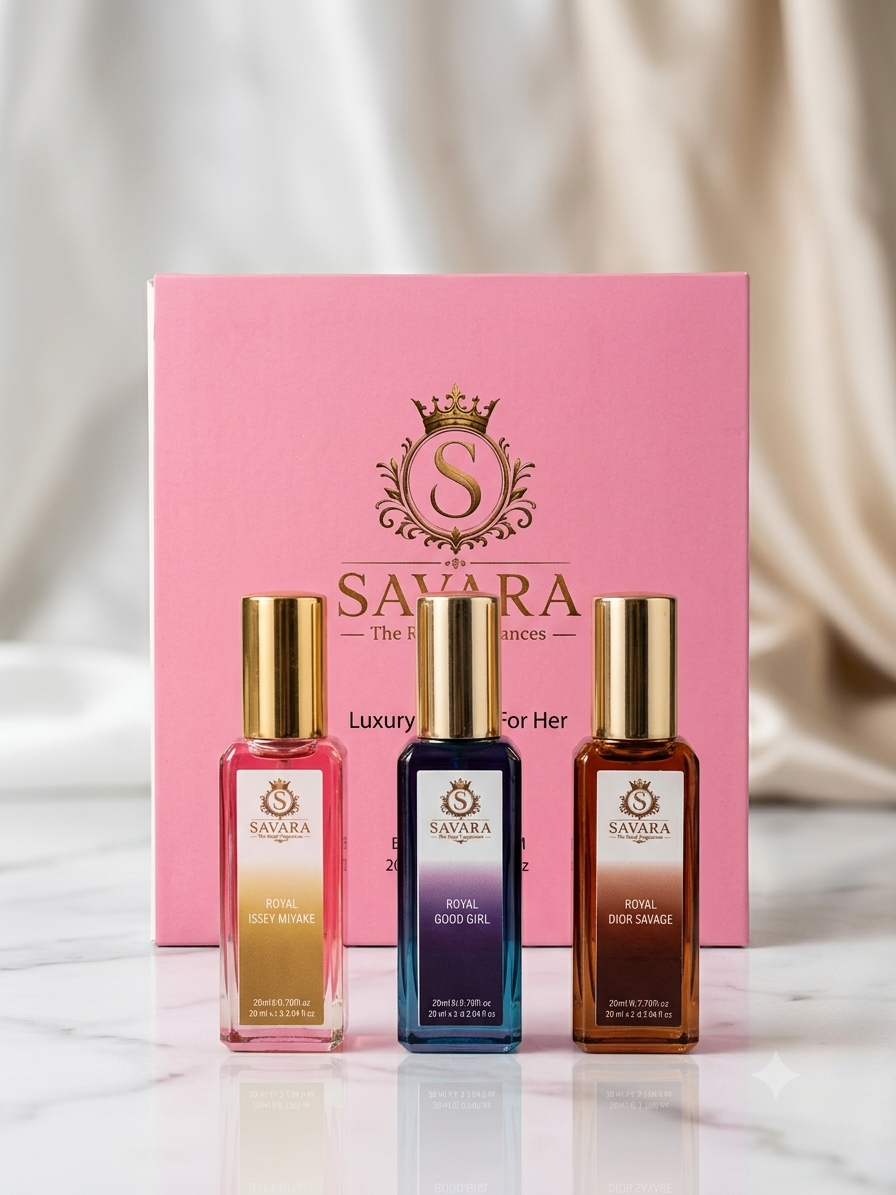
At SAVARA – The Royal Fragrances, fragrance is about more than simply smelling good. It is about discovering a scent that complements your personality, occasion and personal style.
Whether you prefer the richness of oud, the softness of musk, the elegance of floral notes, the warmth of amber and vanilla, or the freshness of citrus and aquatic accords, understanding fragrance notes can help you choose with confidence.
Discover your fragrance. Express your character.
SAVARA — The Royal Fragrances
Recent Posts






Subscribe to our newsletter for regular updates about Offers, Coupons & more